British universities are among the most prestigious in the world. Oxford and Cambridge trace their history back to the 11th–13th centuries and remain at the forefront of innovation today through cutting-edge methodologies and technology. Younger institutions have successfully adopted this wealth of experience, consistently climbing to the top of international rankings.
As of 2026, over 15 UK universities are featured in the Global Top 100. This stellar reputation makes graduates of British higher education institutions exceptionally sought after in the international labor market. To maintain these rigorous standards, UK universities undergo regular evaluations by the independent Quality Assurance Agency for Higher Education (QAA).

Oxford University
| University | City | QS Ranking (2026) | THE Ranking (2026) | ARWU Ranking | Annual Tuition (from) |
|---|---|---|---|---|---|
| University of Cambridge | Cambridge | #2 | #3 | #4 | $30,895 |
| University of Oxford | Oxford | #3 | #1 | #7 | $6,925* |
| Imperial College London | London | #4 | #8 | #23 | $43,628 |
| University College London (UCL) | London | #9 | #20 | #17 | $25,462 |
| University of Edinburgh | Edinburgh | #25 | #28 | #38 | $3,490* |
| University of Manchester | Manchester | #32 | #51 | #41 | $18,537 |
*Note: Minimum costs may refer to specific programs or include subsidised rates for domestic students; international fees are generally higher.
Advantages of UK Universities
- World-Class Infrastructure. British campuses impress with their architectural heritage. However, behind the historic stone walls, students find state-of-the-art libraries, research laboratories, and unique museums. For instance, Oxford is home to the Ashmolean Museum, the world’s first university museum, while the University of Manchester operates its own observatory with multiple radio telescopes.
- Unique Traditions. British academia honors centuries-old customs. The academic year typically begins with Freshers’ Week, filled with social events and orientations. Some traditions are institution-specific: at the University of St Andrews, first-year students are assigned academic “parents” (third or fourth-year students) to guide them through social life, culminating in the famous “foam fight” during Raisin Weekend.
- Global Degree Value. International rankings (QS, THE, and ARWU) consistently place the UK as the second most popular destination for international students after the US. A British degree serves as a “hallmark of quality” for employers worldwide.
- High Student Satisfaction. According to recent National Student Survey (NSS) data, international students report high levels of academic support and satisfaction, particularly at specialized London institutions and historic Scottish universities.
Considerations and Special Features
- High Cost. International students typically pay 2–4 times more than UK residents. Additionally, mandatory preparatory programs like A-Levels or Foundation (required for students from many non-EHEA countries) can increase the total cost of relocation and education significantly.
- Narrow Specialization. Unlike the “Liberal Arts” model in the US, British education focuses on specialized courses from day one. Students usually choose 3–4 subjects in high school to align with their university major. This system offers deep expertise but less flexibility to switch majors mid-degree compared to the American majors and minors system.
The Admission Process (2026)
| Study Level | Typical Age | Duration | Min. Annual Cost (USD) | Min. Language Level | Key Exam |
|---|---|---|---|---|---|
| Foundation / Prep | 16+ | 1–2 years | $7,944 | B1 | IELTS 5.0 |
| Bachelor's Degree | 17+ | 3 years | $15,094 | B2 | IELTS 6.0 |
| Medical School | 17+ | 5–6 years | $30,454 | C1 | IELTS 7.0 |
| Master's Degree | 20+ | 1 year | $11,917 | C1 | IELTS 6.5 |
| PhD / Doctorate | 21+ | 3+ years | $19,861 | C1 | IELTS 7.0 |
Application Systems
For undergraduate and preparatory programs, applications are managed via the UCAS (Universities and Colleges Admissions Service) system. Graduate applicants (Master’s and PhD) usually apply directly through the university’s own online portal.
Academic Recognition
Most universities assess international diplomas independently based on certified translations. However, some cases may require a statement of comparability from Ecctis (formerly NARIC) to determine the UK equivalent of a foreign qualification.
Foundation Programs for Non-EU Students
International students from systems with 11–12 years of schooling generally cannot enter a UK Bachelor’s degree directly. They must complete one of the following:
- Foundation: A one-year transition course.
- A-Levels: A traditional two-year British high school qualification.
- International Year One: An intensive program that combines Foundation with the first year of a Bachelor’s degree.
Detailed Admission Requirements
For Undergraduate Programs:
- High School Diploma/Secondary School Certificate.
- Proof of completion of a Foundation program or one year of university study abroad.
- IELTS Academic certificate (typically 6.0+).
- Personal Statement (standardized for UCAS).
- Letters of Recommendation (1–2).
- Resume/CV (for mature students or specific courses).
For Master’s Programs:
- Bachelor’s degree in a related field (GPA usually 3.0/4.0 or higher).
- IELTS Academic certificate (typically 6.5+).
- Personal Statement and Academic CV.
- References from professors or employers.
- Research Proposal (for MRes or MPhil programs).
- GRE/GMAT (occasionally required for Business/Finance).
For PhD Programs:
- Master’s degree (with high academic standing).
- IELTS Academic certificate (7.0+).
- Detailed Research Proposal.
- Successful interview with a potential supervisor.
- Proof of research experience or publications.
Types of Educational Institutions
- Further Education (FE) Colleges. These focus on technical and professional training for students 16+. They offer BTEC qualifications and apprenticeships.
- University Colleges. Smaller institutions focusing on practical degrees. They may award degrees under the authority of a larger partner university.
- Ancient Universities. The six oldest institutions founded before 1800: Oxford, Cambridge, St Andrews (1413), Glasgow (1451), Aberdeen (1495), and Edinburgh (1583).
- Red Brick Universities. Originally founded in industrial cities in the 19th and early 20th centuries, such as Birmingham, Liverpool, and Manchester.
- New (Post-1992) Universities. Former polytechnics that were granted university status by the Further and Higher Education Act of 1992 (e.g., Coventry University, Plymouth University).
University Groups and Associations
- Russell Group. An association of 24 leading research-intensive universities. It is often considered the UK equivalent of the American Ivy League. Over 30% of all international students in the UK study at Russell Group institutions.
- Universities UK (UUK). The collective voice for 140+ universities across the country, advocating for the interests of the higher education sector.
- University Alliance. A group of technical and professional universities with close ties to industry and business.
Scholarships and Financial Aid
While there are no “free” universities in the UK, international students can significantly reduce costs through:
- Government Scholarships: Such as the Chevening or Commonwealth scholarships.
- University Awards: Many institutions offer merit-based entrance scholarships ranging from $2,000 to full tuition waivers.
- External Funds: Industry-specific grants for STEM or social research.
Interesting Facts
- Global Community: Every year, the UK welcomes over 500,000 international students from more than 200 countries.
- The “Oxbridge” Rule: Applicants generally cannot apply to both Oxford and Cambridge in the same academic year for undergraduate study.
- Lifelong Learning: In British colleges, the average student age is 27, and thousands of students are over the age of 60.
- Design Excellence: Central Saint Martins in London is one of the world’s oldest and most famous design schools, with alumni including Alexander McQueen and Stella McCartney.
Gallery of UK Universities

University of Cambridge

University of Edinburgh
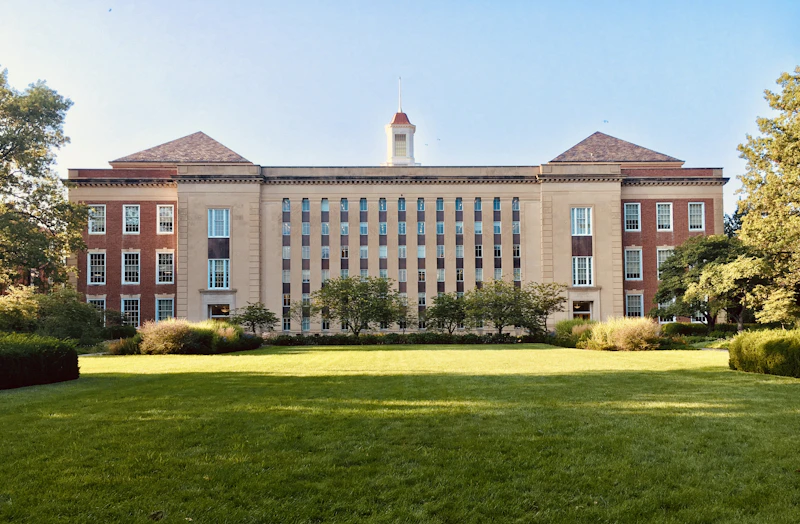
University of Manchester